
Epilepsy Dating: Find Love Without Fear on OpenHeartMatch
An epilepsy dating site where your diagnosis is understood, not feared. Meet people who respect your seizure history, understand your triggers, and see the whole person - not just a medical condition. Build a relationship grounded in safety, honesty, and genuine connection.
Why OpenHeartMatch Is the Safe Epilepsy Dating Site
Living with epilepsy means navigating a world that often misunderstands your condition. Seizures carry centuries of stigma - people fear what they do not understand, and that fear shows up in dating more painfully than almost anywhere else. On mainstream platforms, disclosing epilepsy can mean ghosting, awkward questions, or being treated as fragile. On OpenHeartMatch, that experience does not happen because every member has chosen a community where disability and chronic conditions are met with empathy, not judgment.
Our platform was built by people with firsthand experience of disability and chronic health conditions. Accessibility is not a feature we added later - it is the foundation every line of code is written on. Because we are a 501(c)(3) nonprofit, core features stay free forever; we are not a company monetizing your search for love. And because people with disabilities face higher rates of abuse and exploitation, safety is our highest priority: every profile is verified by a human, every report is reviewed manually, and predatory behavior triggers immediate action.
- Safety as a core design principle. Human verification, manual moderation, and a community educated about epilepsy and other conditions mean you are entering a space that has already done the work of understanding.
- No disclosure anxiety. On an inclusive platform, you never have to dread the moment of telling someone about your epilepsy. You can share on your own timeline, with people who already opted into a disability-aware community.
- Accessibility-first interface. Screen reader compatibility, keyboard navigation, high-contrast modes, and distraction-reduced layouts - because sensory triggers and photosensitivity matter in epilepsy, and your dating experience should never add to them.
Curious how we compare to mainstream apps? Our Tinder for Disabled comparison breaks down exactly why standard platforms fall short for people managing epilepsy and other health conditions.
Epilepsy in Romantic Relationships
Epilepsy is far more than seizures - it shapes how a person navigates intimacy, trust, daily routines, and the emotional landscape of a partnership. The unpredictability of seizures can create a constant background hum of anxiety: Will it happen on a date? Will my partner know what to do? Will they still see me the same way afterward? These are not irrational fears. They are real questions that deserve honest answers, and they are questions that a partner who understands epilepsy is already prepared to address.
The Strengths People with Epilepsy Bring to Relationships
People living with epilepsy often develop extraordinary qualities through the experience of managing a chronic condition: deep empathy for others facing health challenges, resilience built through years of adapting, a heightened appreciation for the present moment, and a maturity about life's unpredictability that many partners find grounding. Many people with epilepsy are fiercely loyal, honest about vulnerability, and skilled at communicating their needs - because they have had to advocate for themselves in medical settings, workplaces, and social situations their entire adult lives. These are not despite the epilepsy; they are forged by it.
The Real Challenges Partners Should Understand
Epilepsy also brings challenges that deserve honest acknowledgment. Seizure unpredictability can limit spontaneity - late nights, flashing lights, alcohol, and sleep deprivation are common triggers that require lifestyle accommodations. Medication side effects can include fatigue, memory difficulties, mood changes, or cognitive fog that affects daily life. The emotional toll of living with a condition that can strike without warning - the hypervigilance, the grief over lost independence, the frustration of restrictions - is real and can surface in a relationship as anxiety, withdrawal, or irritability. These are not character flaws. They are the human cost of a neurological condition, and they are manageable with a partner who understands.
"After my first seizure on a date, I was sure it was over. Instead, he asked me to teach him seizure first aid. That was the moment I knew this relationship was different. We are engaged now." - Community member, diagnosed with epilepsy at 22
How OpenHeartMatch Changes the Equation
On OpenHeartMatch, you are not constantly weighing when to disclose, how much to share, or whether someone will leave when they find out. The community baseline already includes understanding of epilepsy and dozens of other conditions. Our Vibes matching system factors in lifestyle compatibility - including alcohol preferences, activity levels, and sensory sensitivities - so you are more likely to match with someone whose natural rhythms already align with the accommodations your epilepsy requires. That alignment reduces friction and creates space for the relationship to grow around shared values rather than around managing a diagnosis.
For more on navigating health conditions in dating, our chronic illness dating guide covers the broader landscape of dating with conditions like fibromyalgia, lupus, and MS, and our anxiety and dating guide addresses the emotional overlap that many people with epilepsy navigate.
Safety on Dates: Seizure-Aware Planning
Dating with epilepsy means thinking about safety in ways that most people never have to. That does not mean epilepsy should keep you from enjoying rich, spontaneous, fulfilling dates - it means building a few simple habits that let you relax because you know you are prepared. The most empowering thing about seizure-aware planning is that it replaces anxiety with confidence: when you have a plan, the fear of the unknown shrinks.
Here is a practical framework for seizure-aware dating that members of our community have found genuinely useful:
- Choose venues with your triggers in mind. If photosensitivity is a trigger, avoid places with strobe lighting - some restaurants, concerts, and entertainment venues use them. If sleep deprivation is a trigger, plan daytime dates or early evenings rather than late nights. If alcohol interacts with your medication, suggest coffee, tea, or alcohol-free venues. These are not limitations - they are preferences that shape a date around what makes you comfortable, and a good partner will appreciate the thoughtfulness.
- Educate your partner on seizure response before it is needed. The most anxiety-reducing conversation you can have is the one about what to do if a seizure happens. Keep it simple and calm: stay with me, do not restrain me, turn me on my side, time the seizure, call 911 if it lasts longer than five minutes. A partner who knows this is a partner who will not panic - and a partner who learns this for you is a partner who cares deeply.
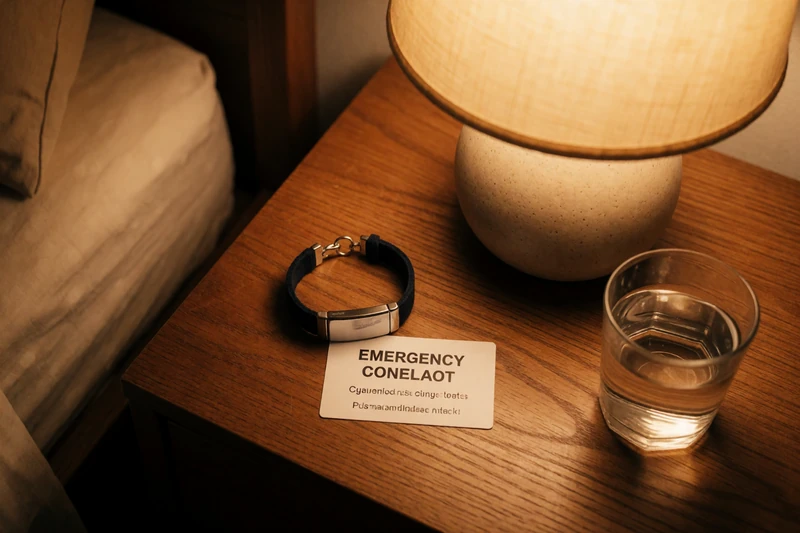
- Carry your medical alert and emergency contact information. A medical alert bracelet, necklace, or phone lock screen with your condition and emergency contact is a simple, powerful safety net. It speaks for you when you cannot speak for yourself. Make sure your date knows where it is and who your emergency contact is - not as a frightening disclosure, but as a practical detail, like telling someone where you parked.
- Share your location with a trusted friend on first dates. This is good practice for anyone dating online, and especially important when you have a condition that could require assistance. Share your live location with a friend, check in at agreed times, and have a plan for getting home independently. Our safety tips for disabled dating cover this and other practices in more depth.
- Know your seizure patterns and plan around them. If your seizures tend to happen at certain times, during certain activities, or in specific states (fatigue, stress, hormonal changes), use that self-knowledge to plan dates when you are most likely to be at your best. Self-awareness is not a limitation - it is a superpower that lets you show up fully present and confident.
- Keep medication consistent, even on date nights. Missed doses are one of the most common triggers for breakthrough seizures. Set reminders, carry a dose with you, and do not let the excitement of a date derail your medication schedule. A partner who understands why you pause to take medication is a partner who respects your health.
For a broader look at accessible and safe date ideas, our accessible first date ideas guide offers a checklist for evaluating venues and suggestions tailored to different types of disabilities and health conditions.
Disclosing Your Epilepsy: When and How
One of the most common questions people with epilepsy ask about dating is: when do I tell them? There is no single right answer, and anyone who tells you there is one perfect moment is oversimplifying. The right time depends on your comfort, your safety, and the specific dynamic of the connection you are building. What matters most is that you feel in control of the disclosure - that it is your choice, on your timeline, in your words.
Here is a balanced look at two common approaches. Neither is inherently better - the right one depends on you.
Early Disclosure: Lead with Honesty
Some people prefer to mention their epilepsy early - in their profile, on the first date, or within the first few messages. This approach has real advantages:
- Filters out incompatible people fast. If someone is going to react poorly, you find out before you are emotionally invested.
- Sets a tone of openness. Starting with honesty signals that you value transparency, and invites the same from your partner.
- Reduces anxiety. The dread of "when do I tell them" is replaced by the relief of "they already know."
- On OpenHeartMatch, this is low-risk. The community is already disability-aware, so early disclosure is met with understanding rather than shock.
Building Trust First: Share When Ready
Others prefer to build a connection first and share their epilepsy once trust is established. This approach also has valid reasons:
- Let them know you first. You are more than your diagnosis. Building a connection first means they see the whole person before learning about the condition.
- Creates a context for understanding. A partner who already cares about you is more likely to respond with empathy and curiosity than fear.
- Protects your emotional energy. Not every first date deserves your full medical history. You get to decide who earns that level of vulnerability.
- Safety still comes first. If a date involves situations where a seizure is possible, disclose before that date - not after. Safety overrides timing preferences.
A note on disclosure and safety
Regardless of which approach you choose, if a date involves circumstances where a seizure could occur - driving, swimming, being in an unfamiliar environment - disclose before that date. Your partner does not need a full medical history, but they do need to know how to respond if something happens. Safety always comes before comfort.
For more on navigating the emotional dimensions of disclosure, our anxiety and dating guide offers strategies for managing the vulnerability that comes with sharing personal health information, and our chronic illness dating guide explores disclosure timing across a range of conditions.
Epilepsy Dating Frequently Asked Questions
Questions we hear most often from people with epilepsy exploring online dating - and from partners open to dating someone with a seizure condition.
Is there a dating site specifically for people with epilepsy?
Yes - OpenHeartMatch is a disability-inclusive dating site that welcomes people with epilepsy alongside the broader disability, chronic illness, and mental health community. Unlike mainstream platforms that treat epilepsy as something to hide, every feature here is designed with chronic health conditions in mind. Our Vibes matching system factors in lifestyle compatibility - including alcohol preferences and activity levels - so you are more likely to match with someone whose rhythms already align with your needs. Core features are free, and our human moderation team keeps the community safe and respectful.
When should I tell someone I am dating that I have epilepsy?
There is no single right moment - it depends on your comfort, your safety, and the connection you are building. Some people prefer to mention it early to filter out incompatible matches quickly, while others build trust first and share once they feel safe. On OpenHeartMatch, both approaches are valid because the community is already disability-aware. The one exception is safety: if a date involves situations where a seizure could occur, disclose before that date so your partner knows how to respond. You are always in control of your narrative here.
Can people with epilepsy have healthy romantic relationships?
Absolutely. People with epilepsy date, fall in love, build long-term partnerships, and marry every day. Epilepsy is a medical condition, not a barrier to intimacy. What creates difficulty is not the epilepsy itself but stigma, lack of understanding, and partners who do not know how to respond to seizures. OpenHeartMatch addresses all three by building a community where chronic conditions are the norm, not the exception, and where resources for navigating epilepsy in relationships are readily available.
How do I help my partner understand my epilepsy?
Start with a calm, matter-of-fact conversation outside of any seizure context. Share what type of seizures you have, what they look like, what your triggers are, and what your partner should do if one happens. Keep it practical - the goal is to replace fear with knowledge. You can also point them to reputable resources like the Epilepsy Foundation. A partner who is willing to learn seizure first aid is a partner who cares deeply. On OpenHeartMatch, many members find that partners are already more informed because the community baseline includes disability awareness.
Is OpenHeartMatch a mental health dating site too?
Yes. OpenHeartMatch welcomes people with a wide range of disabilities, chronic health conditions, and mental health conditions - including epilepsy, bipolar disorder, PTSD, ADHD, autism, and more. We do not separate these communities because we believe in connection across shared experiences of navigating a world that is not always designed for how our brains and bodies work. Our platform is neurodiversity-affirming, disability-inclusive, and built on the principle that everyone deserves access to safe, respectful, genuine connection.
Is OpenHeartMatch free for people with epilepsy?
Yes. As a 501(c)(3) nonprofit, we are committed to keeping core features - creating a profile, browsing matches, and sending messages - free forever. We are funded by grants and community support, not by paywalls that exploit your search for connection. Optional premium features may exist in the future, but the essentials will always be accessible to everyone.