
Autism Dating: Find Your Person on the Spectrum
An autism dating app where direct communication is the norm, not the exception. Meet autistic adults and neurodivergent allies who value honesty, shared interests, and the beauty of thinking differently. No masking required, no small talk demanded - just real connection on your terms.
Why OpenHeartMatch Is the Top Autism Dating App
Dating with autism on mainstream platforms often means navigating a world built for neurotypical communication styles - the unwritten rules of eye contact, the pressure to read between lines, the exhaustion of masking your natural way of being. On OpenHeartMatch, that world is replaced by one designed around neurodiversity. Direct communication is celebrated, sensory needs are respected, and your autistic identity is something to be understood, not concealed. Our platform was built by people with lived experience of disability who understand that accessibility means more than screen reader compatibility - it means designing for different ways of thinking and connecting.
Accessibility is not a feature we added at the end. It is the foundation of every profile field, every notification, and every interaction. We test with real users who navigate the world as autistic adults, and if a feature does not work for neurodivergent communication patterns, it does not ship. As a nonprofit funded by grants and community support, we keep core features free forever - no paywalls exploiting your search for connection.
- Built by people with lived experience. Our team includes neurodivergent individuals who understand the barriers firsthand - from the exhaustion of social masking to the anxiety of decoding ambiguous messages on mainstream dating apps.
- Accessibility-first design. Screen reader compatibility, keyboard navigation, high-contrast interfaces, and 44×44px minimum touch targets - tested with assistive technology users and designed for sensory comfort.
- Human moderation, not algorithms. Every profile is verified by a real person. Reports are reviewed manually. Harassment, masking pressure, and predatory behavior trigger immediate action - no automated dismissals.
Curious how we compare to mainstream apps? Read our Tinder for Disabled comparison for a detailed breakdown of why standard platforms fall short for autistic adults.
Neurodivergent Love: Relationships on the Spectrum
Autistic relationships are often some of the deepest, most loyal, and most genuinely connected partnerships out there - yet they are frequently misunderstood because they do not follow neurotypical scripts. The assumption that autistic people lack empathy or desire for connection is one of the most persistent and harmful myths in popular culture. In reality, many autistic adults experience emotions so intensely that the challenge is not feeling - it is finding a partner who understands how they express those feelings. On OpenHeartMatch, that partner is already here.
The neurodiversity-affirming reality
Autistic people desire love, companionship, and intimacy just as deeply as anyone else. Research and community experience consistently show that the barriers to autistic dating are not internal - they are external: social expectations that reward masking, dating environments that punish directness, and platforms designed for neurotypical communication patterns. OpenHeartMatch removes those barriers so your natural way of connecting can thrive.
The Strengths of Autistic Relationships
Autistic partners bring qualities that are often overlooked in mainstream dating conversations: deep loyalty, passionate commitment to shared interests, refreshing honesty, and a capacity for focused attention that makes a partner feel truly seen. Many autistic adults describe their approach to relationships as "all in" - once they choose someone, they invest deeply and consistently. On a platform built for neurodivergent connection, these strengths become the foundation of lasting partnerships rather than traits that get misread by neurotypical-centric dating norms.
Masking, Burnout, and the Freedom to Be Yourself
Masking - the exhausting practice of suppressing autistic traits to appear neurotypical - takes a devastating toll on mental health and relationship authenticity. Many autistic adults describe years of dating while masking, only to realize that the person their partner fell for was not really them. OpenHeartMatch is built so you never have to mask. Your stimming is not weird, your directness is not rude, and your need for routine is not inflexibility. When you connect with someone who already understands neurodivergence, the energy you once spent camouflaging becomes available for genuine intimacy.
Neurodivergent-Neurotypical and Neurodivergent-Neurodivergent Pairings
Some of our members are looking for a partner who shares their neurodivergent experience; others are seeking a neurotypical ally who understands and respects their autistic identity. Both paths can lead to deeply fulfilling relationships. The key is mutual understanding - a partner who does not interpret your need for alone time as rejection, who does not read your directness as coldness, and who celebrates your special interests rather than tolerating them. Our Vibes matching system helps surface compatible communication styles so you spend less time translating and more time connecting.
"I spent years pretending to be someone else on dating apps. On OpenHeartMatch, I wrote my profile the way I actually think - direct, detailed, a little intense. The first person who messaged me said, 'Finally, someone who says what they mean.' We've been together eight months." - Community member, diagnosed autistic at 27
For a deeper exploration of neurodivergent relationships across autism and ADHD, our neurodivergent love guide offers an affirming look at connection beyond neurotypical norms.
Sensory-Friendly Date Ideas for Autistic Adults
The classic first date script - crowded bar, loud music, constant eye contact, unpredictable small talk - is essentially a sensory nightmare for many autistic adults. But dating does not have to mean enduring discomfort. Some of the most meaningful connections happen in environments designed for calm, shared focus, and natural conversation. Here are practical, specific sensory-friendly date ideas that prioritize comfort without sacrificing connection.
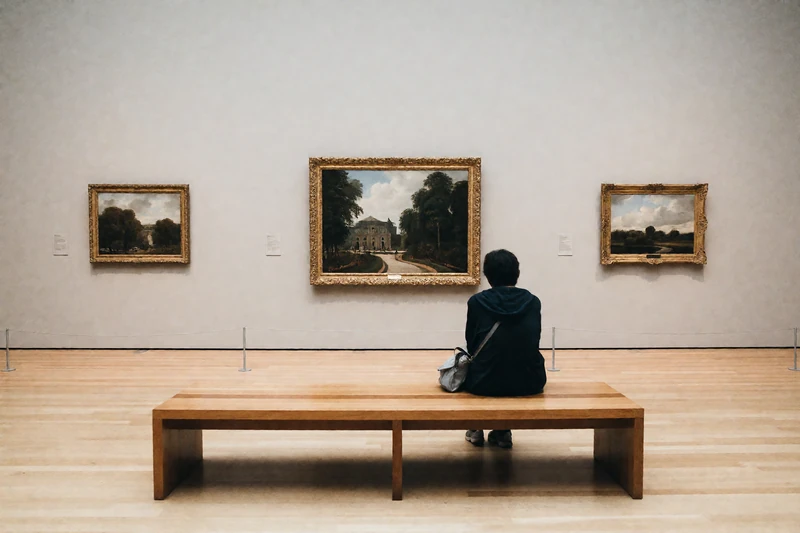
- Visit a quiet museum or gallery during off-peak hours. Art museums and galleries offer shared visual focus - you can look at something together, which removes the pressure of constant eye contact. Choose weekday mornings or early afternoons when crowds are thin. The structured environment, predictable layout, and low noise levels make it ideal for sensory-sensitive daters. Discuss what you see - art provides natural conversation starters without the awkwardness of open-ended small talk.
- Browse a bookstore or library together. Bookstores are naturally quiet, structured spaces with built-in conversation topics. You can walk side by side (reducing eye contact pressure), pick up books that reveal your interests, and let the environment guide the conversation. Many independent bookshops have café corners where you can sit and talk when you are ready. This date works beautifully for autistic adults who connect through shared special interests.
- Take a nature walk in a botanical garden or park. Outdoor spaces with natural soundscapes - birdsong, rustling leaves, water features - are often soothing rather than overwhelming. Walking side by side reduces the social pressure of face-to-face conversation, and the environment provides gentle sensory input without the chaos of urban noise. Choose gardens with clear paths and predictable layouts so you can focus on each other, not on navigating unpredictable terrain.
- Attend a sensory-friendly screening at a local cinema. Many theaters now offer sensory-friendly showings with lowered volume, raised house lights, and relaxed rules about movement and noise. This creates a low-pressure shared experience where you can enjoy a film together without sensory overload. The structured duration and clear social script - arrive, watch, optionally discuss - makes it comfortable for autistic adults who appreciate predictable social formats.
- Explore a shared special interest together. One of the greatest strengths of autistic relationships is the depth of special interests. A date built around a shared passion - visiting a model train show, exploring a historical site, attending a coding workshop, or browsing a vintage record store - lets you connect through what genuinely excites you. When the activity is the shared focus, conversation flows naturally and the pressure to perform socially dissolves.
- Have a virtual date before meeting in person. For many autistic adults, the ability to communicate from a controlled sensory environment is a game-changer. A video call or text-based chat lets you manage sensory input, take breaks, and communicate in the format that works best for you. OpenHeartMatch's messaging system is designed for this - take your time, think before you respond, and build comfort before an in-person meeting.
For more accessible date ideas across different types of disability, our accessible first date ideas guide offers a comprehensive checklist for planning inclusive, comfortable meetups.
Communication Strategies for Autism Dating
Communication is where autistic and neurotypical dating styles most often diverge - and where the most painful misunderstandings occur. Autistic communication tends to be direct, literal, and detail-oriented. Neurotypical communication often relies on implication, subtext, and social convention. Neither style is wrong, but when they collide without mutual understanding, both partners can feel frustrated and unseen. On OpenHeartMatch, we normalize direct communication and provide tools to bridge the gap.
Here is how these two communication approaches differ - and how to navigate the space between them with respect on both sides.
Direct Communication (Autistic Style)
- What you say is what you mean. No hidden messages, no tests, no need to decode subtext. This style is honest, efficient, and deeply respectful of both partners' time and energy.
- Questions are genuine, not rhetorical. When an autistic person asks "Are you upset?" they want to know - not fish for reassurance. This eliminates the exhausting guessing games that erode neurotypical relationships.
- Boundaries are stated, not implied. Clear communication about needs, sensory limits, and social energy prevents the resentment that builds when boundaries are expected to be intuited.
- Special interests are shared with enthusiasm. What neurotypical culture might call "oversharing" is actually a gift - an invitation into the things that matter most. Receiving this with genuine interest builds deep trust.
Reading Between the Lines (Neurotypical Style)
- Meaning is often implied, not stated. Neurotypical communication frequently encodes messages in tone, timing, and context - which can feel like a puzzle to an autistic partner who takes words at face value.
- Indirect requests are common. "It's cold in here" may mean "please close the window" rather than a simple observation. This indirectness can create confusion and frustration for literal communicators.
- Social conventions carry unspoken weight. Eye contact, small talk, and reciprocal social rituals are expected without being explained - and their absence can be misread as disinterest or rudeness.
- Emotional subtext is prioritized. Neurotypical partners may expect their feelings to be inferred from subtle cues, which places an unfair decoding burden on autistic partners who communicate differently.
Practical Tips for Bridging the Gap
Whether you are autistic, neurotypical, or somewhere in between, successful autism dating comes down to one principle: assume good faith and ask for clarity. If something feels ambiguous, ask directly. If you need communication to happen in a specific way - text rather than call, written summaries after conversations, explicit plans rather than spontaneous ones - say so. On OpenHeartMatch, these preferences are not just accepted; they are built into the profile system so you can communicate your style before the first message.
For partners navigating anxiety alongside communication differences, our anxiety and dating guide offers grounding techniques and strategies that complement direct communication beautifully. And if you are exploring the intersection of autism and ADHD in relationships, our neurodivergent love guide dives deeper into mixed-neurotype dynamics.
Autism Dating FAQ
Questions we hear most often from autistic adults exploring online dating - and from partners open to dating someone on the spectrum.
Is there a dating site specifically for autistic adults?
Yes - OpenHeartMatch is a dating site built for autistic adults and the broader neurodivergent community. Unlike mainstream platforms that treat autism as an edge case, every feature here is designed and tested with neurodivergent users in mind. From profile fields that let you communicate your preferred interaction style to our Vibes matching system that factors in sensory and communication needs, the entire experience is shaped around your reality. Core features are free, and our human moderation team keeps the community safe from harassment and masking pressure.
Should I mention my autism in my dating profile?
On OpenHeartMatch, you never have to hide your autistic identity - and you never have to lead with it as if it were a disclaimer. Your profile can include as much or as little about your neurodivergence, communication style, sensory needs, and special interests as you want. Many users find that being upfront on an inclusive platform removes the anxiety of when to disclose and lets conversations focus on personality, interests, and connection instead. You are in control of your narrative here.
What is the 10 second rule for autism?
The "10 second rule" is a community guideline some autistic adults use in social and dating contexts: when asking a question or starting a conversation, give the other person at least ten seconds to process and respond before assuming silence means disinterest. Autistic communication often involves longer processing time, and this patience prevents misreading a thoughtful pause as rejection. On OpenHeartMatch, our messaging system supports asynchronous communication - you can take as long as you need to respond, removing the real-time pressure that makes mainstream dating apps exhausting for many autistic adults.
Can autistic adults have fulfilling romantic relationships?
Absolutely. Autistic adults date, fall in love, build intimate relationships, and marry every day. Autism is a neurodevelopmental difference, not a barrier to love or connection. What often creates difficulty is not autism itself but societal expectations that reward masking, dating environments designed for neurotypical communication, and a lack of spaces where direct communication is the norm. OpenHeartMatch addresses all three by building a community where your natural way of connecting is celebrated and where resources for honest communication are available.
Is OpenHeartMatch free for autistic adults?
Yes. As a 501(c)(3) nonprofit, we are committed to keeping core features - creating a profile, browsing matches, and sending messages - free forever. We are funded by grants and community support, not by paywalls that exploit your search for connection. Optional premium features may exist in the future, but the essentials will always be accessible to everyone.
How do I talk to a new partner about being autistic?
There is no single right answer - the best approach depends on your comfort level and the relationship. On OpenHeartMatch, you can share as much or as little as you want in your profile, which removes the pressure of a big reveal moment. Many members find that mentioning their autistic identity naturally - in the context of a communication preference, a sensory need, or a special interest - works better than a formal disclosure conversation. Our neurodivergent love guide offers affirming, practical language for these moments.