
Embracing Intimacy: A Guide to Disability and Sexuality
Disability and sexuality are not opposing forces. This guide breaks down myths, offers practical communication strategies, and points to trusted resources so that disabled individuals and their partners can build fulfilling, intimate relationships.
Breaking the Silence on Disability Sexuality
For too long, society has treated disability sexuality as a taboo subject - something to be whispered about or ignored entirely. The assumption that disabled people are either asexual or uninterested in intimacy is not only false but harmful. Disabled individuals experience desire, romance, and sexual fulfillment just as deeply as anyone else. The difference is that they often face additional barriers: inaccessible information, patronizing attitudes, and a lack of disability sex education that addresses their real questions.
At OpenHeartMatch, our values of chesed (loving-kindness) and human dignity mean we believe every person deserves access to honest, respectful information about their own body and relationships. This guide is part of that commitment. Whether you are disabled and seeking to understand your own sexuality, or you are a partner wanting to build intimacy with someone who has a disability, the information here is designed to educate, validate, and empower.
Why This Matters
Research consistently shows that disabled people have the same range of sexual desires and orientations as non-disabled people. The gap is not in desire - it is in access to education, safe spaces, and partners who see them as whole people.
Common Myths About Disability and Intimacy
Misconceptions about disability and sex are pervasive. They shape how disabled people are treated by partners, healthcare providers, and even themselves. Let's address the most damaging myths directly.
Myth: Disabled people don't want or need sex
This is perhaps the most widespread misconception. Disability does not erase libido, desire, or the human need for closeness. Disabled people have diverse sexual orientations, preferences, and appetites - just like everyone else. Assuming otherwise strips them of agency and personhood.
Fact: Desire is universal
Disabled individuals experience the full spectrum of sexual desire. Some are highly sexual, some are asexual, and most fall somewhere in between - exactly like the non-disabled population. The key is listening to each person rather than projecting assumptions onto them.
Myth: Sex with a disabled person is complicated or dangerous
This fear-based myth keeps many people from exploring relationships with disabled partners. While some disabilities require accommodations or planning, intimacy is not inherently risky. Open communication about what feels good and what doesn't is all that's needed.
Fact: Communication solves most challenges
Every sexual relationship requires communication. Disabled couples simply have more practice naming what they need. Many report that this honesty leads to more satisfying intimacy - because the conversation about bodies and boundaries happens early rather than after frustration sets in.
Myth: Disabled people should be grateful for any attention
This patronizing view frames disabled people as recipients of charity rather than equal partners. It fuels fetishization on one end and erasure on the other. Neither extreme respects the disabled person as a full human being with standards and preferences.
Fact: Disabled people deserve mutual desire
Disabled individuals are entitled to relationships built on mutual attraction, respect, and genuine chemistry - not pity or fetish. OpenHeartMatch's commitment to no exploitation means we actively moderate against fetishizing behavior on our platform.
Building Intimacy and Trust
Intimacy is not just physical - it is emotional, intellectual, and spiritual. For couples where one or both partners have a disability, building trust often means navigating conversations that other couples might avoid until much later. This is not a disadvantage; it is an opportunity for deeper connection.
Trust grows when both partners feel safe being vulnerable. For someone with a disability, vulnerability may include disclosing medical needs, explaining physical limitations, or sharing past experiences of discrimination or trauma. When a partner responds to these disclosures with curiosity rather than discomfort, the foundation of intimacy strengthens.
"The most intimate thing my partner ever did was ask me what I needed - and then actually listen. Not once did they make me feel like my body was a problem to solve."- A member of the OpenHeartMatch community
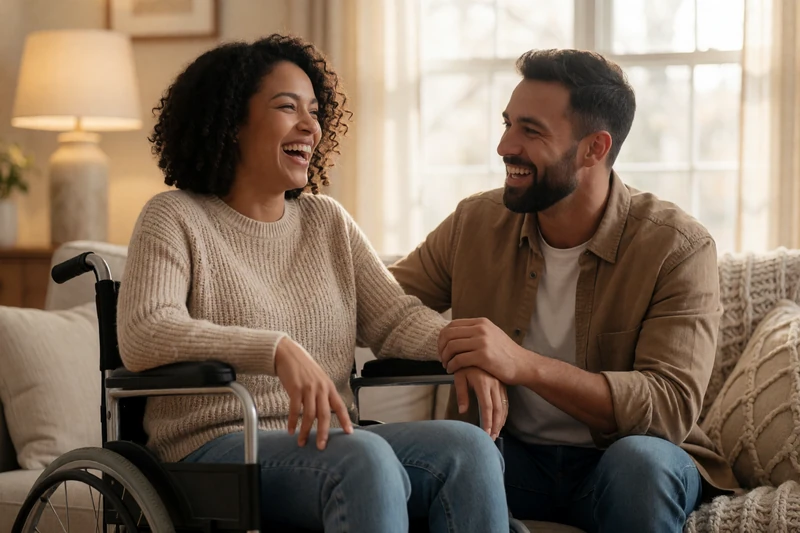
Physical intimacy may require adaptation - different positions, assistive devices, or simply taking more time. The couples who thrive are the ones who treat these adaptations as creative problem-solving rather than obstacles. If you are navigating amputee dating or exploring wheelchair dating, remember that every body is different, and there is no single "right" way to be intimate.
Resources for Disability Sex Education
Quality disability sex education is still hard to find in mainstream curricula. The following resources - books, organizations, and online platforms - provide evidence-based, respectful information about sexuality and disability.
- The Ultimate Guide to Sex and Disability by Miriam Kaufman, Cory Silverberg, and Fran Odette - A comprehensive handbook covering everything from communication to specific physical considerations.
- Untold Desires by Helen Hingson - A memoir exploring love, intimacy, and life as a blind woman navigating relationships.
- Sexuality and Disability Consortium (sexualityanddisability.org) - An online resource hub offering practical guidance, personal stories, and professional perspectives.
- Reproductive Health Access Project - Provides inclusive reproductive health information designed for people with a range of disabilities.
- The Cripping Sex Podcast - A disability-led podcast discussing sex, dating, and relationships with honesty and humor.
- SIECUS (Sexuality Information and Education Council of the United States) - Advocates for inclusive sex education that addresses the needs of disabled learners.
A Note on Healthcare Providers
Many disabled adults report that doctors are uncomfortable discussing sexuality with them. You have the right to sexual health information from your provider. If yours dismisses your questions, consider seeking a provider who specializes in disability-inclusive care - your body and your relationships deserve informed support.
Communication Tips for Couples
Every strong relationship is built on communication, but when disability is part of the picture, specific strategies can make intimacy more fulfilling for both partners. Here are practical, actionable tips drawn from couples in the OpenHeartMatch community.
- Name what you need - early and often. Whether it's a physical accommodation, a change in pace, or emotional reassurance, stating your needs directly prevents resentment and builds mutual trust.
- Create a shared vocabulary for your bodies. Couples who develop their own language for body parts, sensations, and boundaries report feeling more comfortable and less clinical during intimate moments.
- Plan for intimacy without making it clinical. Some disabilities require scheduling around medication cycles or energy levels. Treat this as setting the stage for connection, not as a medical appointment.
- Explore together, not alone. Trying new things - positions, toys, sensory experiences - is more rewarding when both partners approach it as a shared adventure. Curiosity is more intimate than expertise.
- Check in after, not just during. A brief, honest conversation after intimacy - "What worked? What didn't? How do you feel?" - strengthens the bond and makes the next time even better.
- Seek professional support when needed. Sex therapists who specialize in disability-inclusive practice can help couples navigate challenges with compassion and expertise. There is no shame in asking for guidance.
Intimacy is a skill, not a given. The couples who grow together are the ones who keep talking, keep listening, and keep treating each other as whole people - disability and all. If you are ready to meet someone who sees you completely, OpenHeartMatch is here for you.