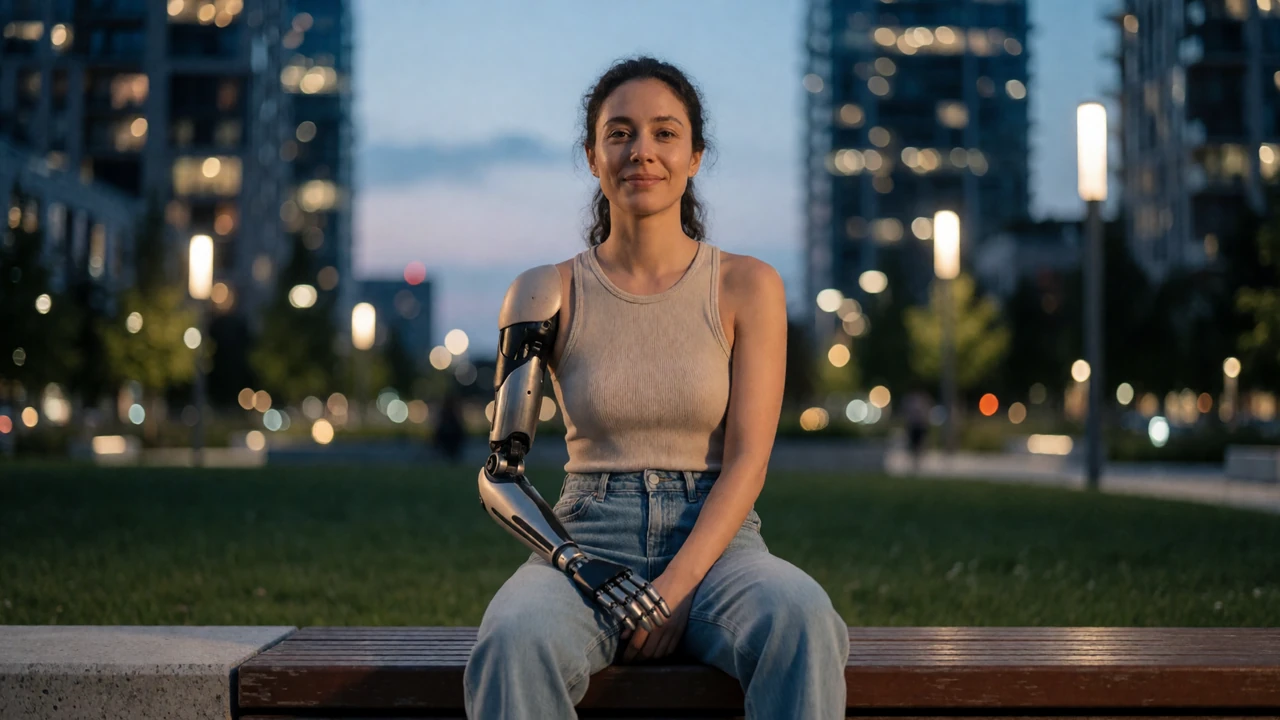
A woman with a prosthetic arm sitting confidently on a park bench at blue hour, representing amputee dating and connection
Accessibility-First · Nonprofit · Free to Join

Amputee Dating: Connect With Understanding Singles on OpenHeartMatch

An amputee dating site where your prosthetic is never a conversation stopper. Meet people who see your whole self - your strength, your humor, your story - and build a relationship on genuine understanding, shared interests, and mutual respect.

See How It Works

Why OpenHeartMatch Is the Leading Amputee Dating Site

Amputee dating on mainstream platforms often means bracing for the moment your prosthetic becomes visible - the awkward pause, the sudden silence, the match that disappears. On OpenHeartMatch, that moment never comes. Your amputation is not something you reveal, justify, or apologize for. It is simply part of who you are, accepted from the very first message. Our platform was built by people with lived experience of disability, which means every design decision starts from the question: does this work for an amputee?

Accessibility is not a feature we bolted on at the end. It is the foundation of every profile field, every button, and every notification. We test with real users who navigate the world with prosthetic limbs daily, and if a feature is not accessible, it does not ship. As a nonprofit funded by grants and community support, we keep core features free forever - no paywalls exploiting your search for connection.

  • Built by people with lived experience. Our team includes amputees who understand the barriers firsthand - from the emotional toll of being ghosted after disclosure to the practical logistics of dating with a prosthetic limb.
  • Accessibility-first design. Screen reader compatibility, keyboard navigation, high-contrast interfaces, and 44×44px minimum touch targets on every interactive element - tested with assistive technology users.
  • Human moderation, not algorithms. Every profile is verified by a real person. Reports are reviewed manually. Fetishizing language, ableist harassment, and predatory behavior trigger immediate action - no automated dismissals.

Curious how we compare to mainstream apps? Read our Tinder for Disabled comparison for a detailed breakdown of why standard platforms fall short for amputee singles.
Overcoming Stigma in Amputee Dating

The hardest part of dating after an amputation is rarely the prosthetic itself - it is the weight of other people's assumptions. Society has trained many people to see amputation as a tragedy first and a person second. On OpenHeartMatch, we flip that script. Here, your amputation is part of your story, not the whole story, and every member of our community has already opted into a world where disability is met with curiosity rather than discomfort.

The reality most amputees know

Studies and community experience consistently show that amputees face higher rates of social isolation and lower rates of romantic partnership than the general population - not because of any inherent limitation, but because of societal stigma, inaccessible dating environments, and the emotional toll of repeated rejection after disclosure. OpenHeartMatch exists to change that equation.

Reframing the Narrative

Amputation is not a deficit to be overcome - it is a lived experience that shapes who you are. The resilience, adaptability, and self-awareness that come with navigating the world as an amputee are qualities that make for deeply grounded partners. On OpenHeartMatch, your profile invites you to share as much or as little about your amputation journey as you want. You are the author of your narrative, not a footnote in someone else's assumptions.

Dealing With Uncomfortable Questions

Even in an inclusive community, curiosity exists. The difference on OpenHeartMatch is that curiosity is met with respect, not intrusion. If someone asks about your prosthetic, you can answer on your own terms - or redirect the conversation entirely. Our community guidelines make clear that no one is entitled to your medical history, and our moderation team backs that up with real consequences for anyone who crosses the line.

Building Confidence After Limb Loss

Confidence after amputation is not about pretending the loss did not happen - it is about integrating it into a full, rich identity. Many of our members describe the experience of joining OpenHeartMatch as the first time they felt visible as a complete person, not as an incomplete one. When you are surrounded by people who see your prosthetic as simply part of the landscape, the energy you once spent hiding or explaining becomes available for genuine connection.

"My prosthetic leg used to be the thing I hid. On OpenHeartMatch, it became the thing that started my best conversation - with someone who asked about my adaptive running club before asking anything else." - Community member, below-knee amputee

For more on the emotional landscape of disability and relationships, our disability and sexuality guide offers a deeper exploration of identity, intimacy, and self-acceptance.

Intimacy and Trust After Amputation

Intimacy after limb loss carries layers that go beyond the physical. There is the practical question of how your prosthetic fits into closeness. There is the emotional question of vulnerability and acceptance. And there is the relational question of trust - trusting that a partner sees your body with desire rather than pity, with curiosity rather than obligation. These are real, valid concerns, and OpenHeartMatch is built to support members through every layer of them.

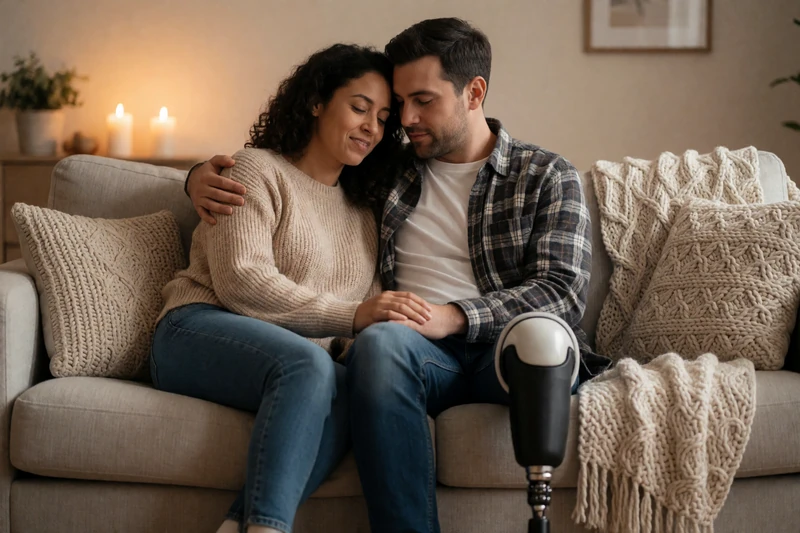
A couple cuddling on a couch with the woman's below-knee prosthetic visible, representing intimacy and trust after amputation

Here is how we approach the two sides of this conversation - the concerns amputee singles bring, and the support our platform provides.

Common Concerns

  • Will a partner see my residual limb as undesirable? The fear of rejection at the most vulnerable moment is one of the most common barriers amputees describe.
  • How do I bring up my prosthetic in a new relationship? Timing, language, and the other person's reaction all create anxiety around disclosure.
  • Will intimacy be physically different or uncomfortable? Practical questions about positioning, prosthetic use, and sensation are real and deserve honest answers.
  • Am I fetishized rather than genuinely desired? The line between attraction and objectification can feel blurry, especially on mainstream platforms.

How We Support You

  • A community that normalizes amputation. Every member has opted into a disability-inclusive space, so your prosthetic is never a shock - it is simply part of the landscape.
  • Profile fields that let you set the pace. Share as much or as little about your amputation as you want. You control your narrative, and the conversation follows your lead.
  • Resources for honest conversations. Our blog guides offer practical language for disclosure, intimacy, and navigating new relationships with confidence.
  • Zero-tolerance anti-fetishization policy. Human moderation catches and removes accounts that objectify disability. You deserve desire, not a fetish.

Trust is built in small moments - the first message that asks about your interests before your amputation, the first date where accessibility is assumed rather than negotiated, the first conversation about intimacy where curiosity replaces judgment. OpenHeartMatch is designed to make those moments the norm, not the exception. For practical safety guidance, visit our Safety Tips page.

Advice for Partners Dating Amputee Singles

If you are dating an amputee - or open to it - a little knowledge goes a long way. The most important thing to understand is that there is no single "amputee experience." Every person's relationship with their prosthetic, their body, and their identity is unique. These guidelines are a starting point, not a script. Listen to your partner above all else.

  1. Lead with curiosity, not assumptions. If you have questions about your partner's prosthetic or amputation journey, ask - but let them set the pace. Some people are open books from day one; others prefer to share gradually. Follow their lead rather than projecting what you think they should feel. Curiosity communicated with respect is always welcome; interrogation is not.
  2. Do not make their prosthetic the headline. Your partner is a whole person with interests, values, humor, and dreams. Their amputation is part of their story, not the title. Treat it the way you would any other significant life experience - acknowledged, respected, not dwelt on. The right balance makes your partner feel seen, not scrutinized.
  3. Ask before helping - and respect the answer. Well-meaning help can sometimes feel like an assumption of inability. If you see your partner navigating a curb, carrying a bag, or adjusting their prosthetic, ask: "Want a hand?" If they say no, trust that they have it. Independence is something amputees work hard for, and honoring it builds mutual respect.
  4. Be mindful of phantom pain and energy levels. Many amputees experience phantom limb pain, skin irritation from socket use, or fluctuating energy levels related to prosthetic wear. These are real, physical realities - not mood swings or excuses. A partner who understands that some days require rest and accommodation, without judgment or frustration, is a partner worth keeping.
  5. Talk openly about intimacy when the time is right. Intimacy with an amputee partner may involve practical adjustments - positioning, prosthetic use, sensitivity changes - and honest conversations about these topics strengthen trust. Approach the conversation with warmth and without awkwardness. If you are unsure how to start, our disability and sexuality guide offers respectful, practical language.
  6. Challenge your own ableist assumptions. We all absorb societal messages about disability, often without realizing it. Notice the thoughts that arise when you see your partner's residual limb - are they rooted in pity, fascination, or genuine acceptance? Doing your own internal work is one of the most meaningful gifts you can offer a partner with a disability.

For more on relationships where one or both partners live with disability, our caregiver dating guide explores the dynamics of relationships that involve care and support.

Amputee Dating Success Stories

Real connections happen on OpenHeartMatch. These are stories from amputee singles who found meaningful relationships in a community that saw them for who they are - not for what they were missing.

After my arm amputation, I deleted every dating app. I was tired of being treated like a story instead of a person. On OpenHeartMatch, the first message I got was about my love of trail hiking. We hiked our first date - and my prosthetic was just along for the ride.
A 28-year-old woman with a prosthetic arm hiking with her partner, an OpenHeartMatch amputee dating success story
Above-elbow amputee, in a relationship
I lost my leg below the knee at 32 and thought my dating life was over. OpenHeartMatch proved me wrong. I met someone who asks about my day before my prosthetic, who plans dates around both our energy levels, and who has never once made me feel incomplete.
A 36-year-old man with a prosthetic leg cooking dinner with his partner, an OpenHeartMatch amputee dating success story
Below-knee amputee, engaged

Discover more real stories on our Success Stories page, and learn why our community trusts us on our Why Choose Us page.

Amputee Dating Frequently Asked Questions

Questions we hear most often from amputee singles exploring online dating - and from partners open to dating someone with an amputation.

Is there a dating site specifically for amputees?

Yes - OpenHeartMatch is a dating site built for amputee singles and the broader disability community. Unlike mainstream platforms that treat amputation as an edge case, every feature here is designed and tested with amputees in mind. From profile fields that let you control your narrative to our Vibes matching system that factors in accessibility needs, the entire experience is shaped around your reality. Core features are free, and our human moderation team keeps the community safe from fetishization and harassment.

Should I mention my amputation in my dating profile?

On OpenHeartMatch, you never have to hide your amputation - and you never have to lead with it as if it were a disclaimer. Your profile can include as much or as little about your prosthetic, your amputation journey, and your mobility as you want. Many users find that being upfront on an inclusive platform removes the anxiety of when to tell and lets conversations focus on personality, interests, and connection instead. You are in control of your narrative here.

How does OpenHeartMatch protect amputee singles from fetishization?

We have a zero-tolerance policy for fetishizing language, ableist harassment, and predatory behavior. Every new account goes through human-reviewed verification before going live. Our moderation team handles reports manually - no automated dismissals. We also provide trauma-informed support resources and practical safety guidance on our Safety Tips page. If someone makes you uncomfortable, you can report and block them immediately, and a real person will review your report.

Can amputees have fulfilling intimate relationships?

Absolutely. Amputees date, fall in love, build intimate relationships, and marry every day. Amputation is a physical reality, not a barrier to intimacy or desire. What often creates difficulty is not the amputation itself but societal stigma, the emotional toll of rejection after disclosure, and a lack of supportive spaces. OpenHeartMatch addresses all three by building a community where your prosthetic is simply part of the landscape and where resources for honest conversations about intimacy are available.

Is OpenHeartMatch free for amputee singles?

Yes. As a 501(c)(3) nonprofit, we are committed to keeping core features - creating a profile, browsing matches, and sending messages - free forever. We are funded by grants and community support, not by paywalls that exploit your search for connection. Optional premium features may exist in the future, but the essentials will always be accessible to everyone.

How do I talk to a new partner about my amputation?

There is no single right answer - the best approach depends on your comfort level and the relationship. On OpenHeartMatch, you can share as much or as little as you want in your profile, which removes the pressure of a big reveal moment. Many members find that mentioning their prosthetic naturally - in the context of an interest, a daily routine, or a funny story - works better than a formal disclosure conversation. Our disability and sexuality guide offers respectful, practical language for these moments.

Find Someone Who Sees All of You

Join a community where your prosthetic is never a barrier. Free to join, human-moderated, and built by people who understand.

Free to join. No credit card required. Accessibility-first, always.